
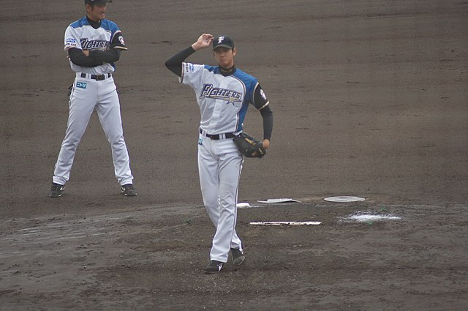
Sports are a special extension of culture, and attending a game is something that many families can enjoy as a unique activity that can provide something for everyone. For my family, my daughter tolerates baseball games while enjoying a popcorn and a pizza slice, while my son is absorbed by the game. Attending an MLB or MLS game in new stadium can be a fun experience as you see the unique food and take in the environment in a new town. Taking in a game in new country takes this to a whole new level. The food is even more unique, the stadiums even more interesting, and the way the fans take in the game can give incredible insight into another culture. A baseball or soccer game in Japan can create a memory that will last a lifetime. Of course, if you want to go even more unique, few things are as iconic as sumo when thinking about a Japanese experience. Adding a sumo event to a family trip would be a core memory for anyone.
Here’s a quick intro into catching a sports in Japan. As my service focus is the Golden Route in Japan, I’ve noted Tokyo & Osaka teams I recommend watching. If you have a chance to catch the Ham Fighters or Carp in your itinerary, don’t hesitate, though. When you’re ready to go, reach out to me, and let’s get your trip to Japan booked. I can help you get some of the best values on your trip and more importantly help you navigate all of this.
Getting Tickets to sports in Japan
Tickets can be bought on directly select teams’ sites for both baseball and J League. This includes all the teams I have recommended. English speaking sites provide a limited selection of sections compared to the native Japanese sites. In some cases, this is for the fans’ own comfort as the local supporters section can be a bit rowdy, especially for soccer. Many of the Japanese sites require registration with local addresses, as well. Make sure to check both Japanese and English speaking team website. In January, for instance, .en sites may still have last year, while Japanese site (with some Google Help) will give you the current year details, already.
Jan 21 example:
Swallow’s Japanese Site
In Mid-January the site has game dates and times already posted for the current year. Dates get posted about two weeks before times. Tickets go on sale about 2 weeks after that. Finding out what day
“fire” is will be the first of your challenges, though.

Jan 21 example:
English Site
Sites for sports in Japan are usually updated about a month after the Japanese site. There are less details, like Stadiums and limited tickets are available. It is MUCH easier, though, to buy here.

For sumo tournaments, go to https://sumo.pia.jp/en with Google translate handy to help you through the process. Tickets for all sporting events can also be bought at 7-11 (7-11s in Japan are for much more than Slurpees and a candy bar.). Even when reserving tickets online, printing and picking them up at 7-11 is required sometimes. Finally, walk-up sales are available at the stadiums for soccer and baseball. Sell outs are rare for most sports in Japan, except for marquee games. Stubhub, sadly, is a no-go. You may find a handful of tickets, but the prices are not going to be market. Of course, your travel advisor may also have a few other ticket sources up his sleeves. Ticket prices for both baseball and soccer are a huge value compared to what we see locally. Premium tickets to baseball games can be had for under $100 USD, for instance.
Taking in some Sumo
There are 4 primary sumo tournaments that are easy to add to a Golden Route itinerary, Tokyo (Jan, May & Sept) and Osaka in March. Each tournament is two weeks long. Tickets go on sale about a month before the tournaments and do sell out fast. Just like games here in the US, weekend days are more crowded than weekends.
https://sumo.pia.jp/en/
View of available tickets on 1/1.

Kids are welcome to attend. In fact, kids under 3 get in free. You can bring your own snacks to the sumo stadium and eat in your seats. If your kid is a picky eater or has some food allergies that you are concerned about, this would be a great option.
Every seat in the stadium is good, but keep in mind ring-side seats do not allow kids under 6. Sumo participants do, in fact, tend to crash into those sections. A 200 pound first baseman coming over the rial is nothing compared to a 200KG (440 pound) sumo wrestler being pushed into you with full force. There are no real nosebleed seats, and there’s no jumbotron to worry about. There are some unique considerations, like removing your shoes going into box seats, and the “courtside” seats, actually, being tatami-mat cushions with no backs. In most situations, good balcony seats are my default recommendation.
Consider the patience of your child when attending the tournament. Kinda like a Dodgers game, showing up half way through the tournament isn’t totally frowned upon. In fact, the main wrestlers usually don’t go on till 3:00. So, many folks come in just for the back half of the day. There is, also, the ability to get up and walk around the arena over the course of the day. So, you’re not glued to your seats all day. Still, even at half a day, bringing an activity bag to keep your kid busy over the course of the experience is recommended as a hedge against a bored kid ruining the experience.
Additionally, sumo is probably something that your kid has normally seen much of, as its one of those unique sports in Japan. To make the experience more enjoyable, this is a sport that I recommend watching some YouTube videos on before attending to get a feel for the pace of the sport, the athletes, and the rules. Like many other aspects of travel, this preparation can help build excitement going into the trip.
If you don’t catch a tournament date, you can catch training. This is a chance to glimpse into the day-to-day life of a Sumo wrestler. Be aware that many stables do have strict age limits (some having a limit of 12+) due to the strict nature of the training and sacredness of the training grounds. Sumo Morning Practice Tour at Stable in Tokyo can be booked just a week in advance, usually.
Baseball, same sport in a new way in Japan
Baseball in Japan is, effectively the same game you see here, but the experience is guaranteed to be unique. Teams have fight songs, fans sing player songs, mascots are much more interactive, there are awesome in game traditions like the umbrella dance and beer girls, and there’s a cool respect for the game and both teams. Of course, you also have a chance to see the next Dodger that will be signed to a 12-year contract, potentially. There are a few teams in the standard itinerary area worth checking out more than others.
Osaka-Hanshin Tigers. Think of them as the Cubs, but instead of a Billy Goat they have Colonel Sanders. They just came off their second Championship in nearly 100 years. They play in a super-unique stadium (infield is all dirt) built in 1924.
There are two teams to see in Tokyo. I think of these teams like the Yankees/Dodgers and Mets/Angels, respectively.
The Giants were the first pro baseball team in Japan. This team is for your bandwagon fan. Being a bandwagon fan for a team in another country does not go against the rules of sports fandom, though. They play in the Tokyo Dome. The upside of the dome is you can be sure to avoid any weather issues and you will catch a game. The bad side is that it is baseball in a dome.
The Swallows play in one of the most historic parks in baseball. It one of three stadiums still standing that Babe Ruth played in (Wrigley and Fenway being the others). It also has one of the coolest in stadium traditions with the umbrella dance. https://www.youtube.com/watch?v=8M1Hi2AFtZk
Baseball season goes about the same time as in the US (March-Oct). Schedule dates posted in November. Times are posted in February, but most afternoon games are 6pm and Sat/Sun games are 2:00pm/. Japanese language sites get posted first. Home team is listed first. Also, it is common for some teams to play in alternate stadiums to make way for things like the national high school baseball tournament (again, sports in Japan do require a fun learning curve) https://npb.jp/games/2024/schedule_10_detail.html. Finally, ticket sales do not start at once for the whole season, for most teams, they are staggered by game month and loyalty tier. For example, here’s the schedule for sale dates for the Swallows.https://ticket.yakult-swallows.co.jp/contents/pages/schedule.html
“Sakka” in Japan
J League is setup much more like the Premier League than MLS. Which, in my opinion makes the games and rivalries much more exciting. It also means there are fewer games that mean nothing, as both the top and bottom of the table are fighting for something. The levels are Jleague 1, 2, & 3 (Then, the JFL and JRL). If you’re going, I recommend sticking to J1 and J2 with, maybe, one or two exceptions. J1 level of play is at par with MLS. You’ll hear fair arguments both ways on which has a slight edge regarding better play.
Jleague 1- Big major stadiums seating 50-60k, often half full (or less) My recommended team to watch is the Vissel Kobe near Osaka. They have an incredible use of technology, an amazing stadium, and are the defending champs. The Urawa Red Diamonds are my Tokyo area suggestion. They have some mixed history, but they have the most passionate fans and a huge stadium that provides a good experience (2002 World cup venue and no track). Be aware that I would caveat certain groups should not attend, based on the history. I can guide you on that when we book, though. Most of the time, unless playing in the National Stadium, I’d avoid the J1 Tokyo teams. Ajinomoto Stadium isn’t a great venue due to the track around the field creating too much distance and the stands are much more likely to be empty than for other teams in the region.
J2- Stadiums seat 10-40k, and attendance is 2,000-15,000 My recommendation at this level is JEF United Chiba an hour from Tokyo Station on the Sobu Line.
J3- Stadiums seat 5-10k, but attendance is 1,500-8,000. My recommendation at this level is Omiya Ardija. The stadium is easily accessible from Tokyo tourist hotels and the area around the stadium is awesome. The team’s fans are very passionate, as well. They just got relegated to J3. So, there may be a hangover, but hopefully the fans rally and keep this stadium experience going.
Currently, the J League season starts in Feb (like MLS) and goes through November. Starting in 2026, though, the season will shift to an August start, like the Premier League. Schedules for the opening weekend are posted in December, but the main schedule doesn’t get posted till mid-January. Tickets don’t go on sale till about a month before the season, as well.
Here are a couple of good YouTube resources on the stadiums, teams, and the atmosphere at games. https://www.youtube.com/watch?v=zdYf2ont6rU
https://www.youtube.com/channel/UCSDri4voGB6iKQ9FSLT45yQ
Whether you go to baseball or soccer, catching sports in Japan is a highly encouraged activity to get a feel for how something so familiar can feel so different in a different culture. Of course, if you want totally different and happen to be in town at the right time, your day at the sumo match will be a unique memory you can share with your family forever. Whatever way you choose to experience sports in Japan, it’s sure to be special for the whole family.
Feature image attribution: shi.k from Japan, CC BY-SA 2.0 <https://creativecommons.org/licenses/by-sa/2.0>, via Wikimedia Commons
Leave a Reply